



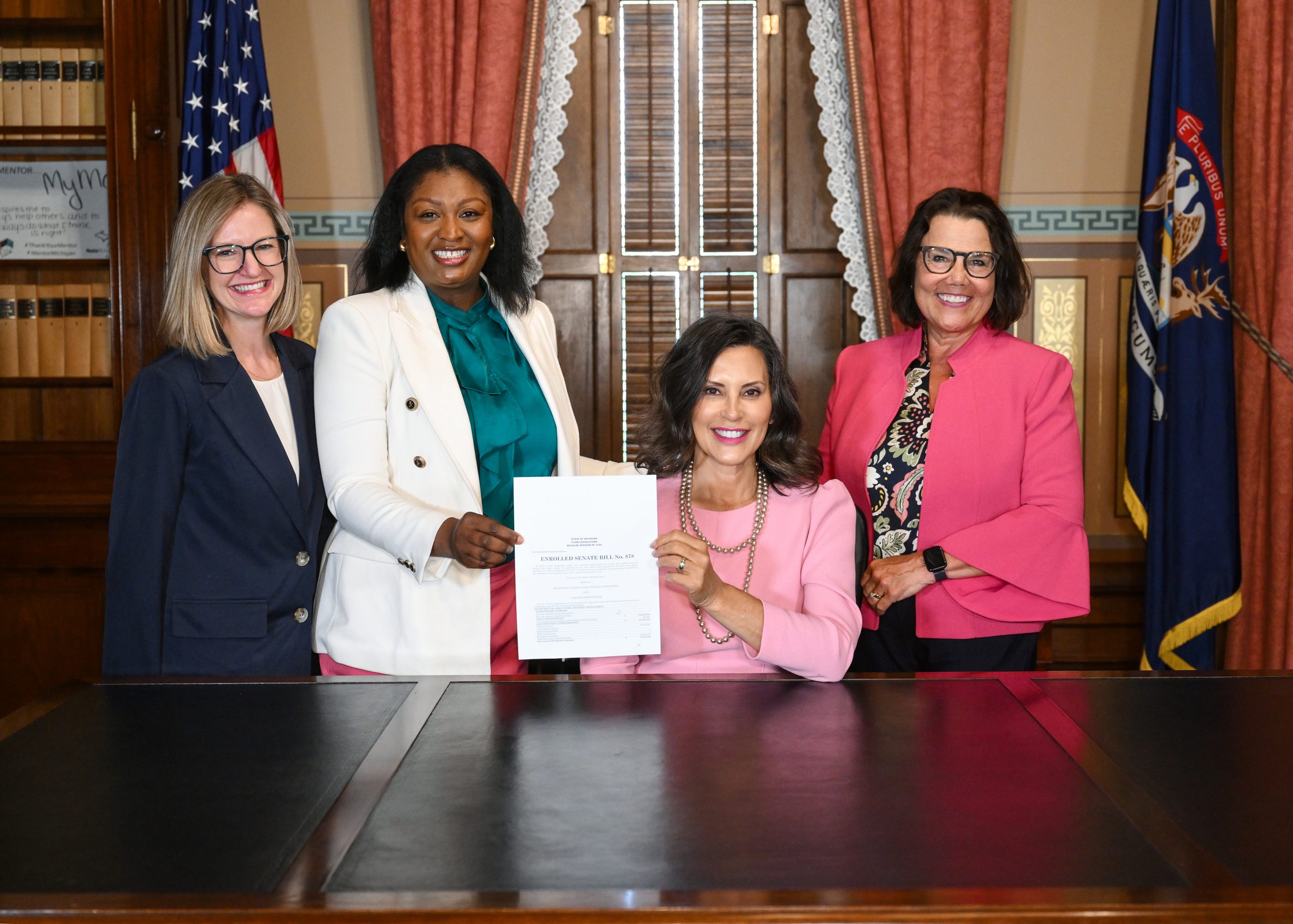
State Rep. Ann Bollin today joined Gov. Gretchen Whitmer as Michigan’s Fiscal Year 2026-27 budget was signed into law, finalizing a spending plan built around fiscal responsibility, government accountability, and investments in the priorities Michigan families depend on.
As chair of the House Appropriations Committee, Bollin spent months leading the House budget process, holding hearings, reviewing state spending, and comparing departmental budget requests against actual spending over the previous several years to ensure taxpayer dollars would be spent responsibly and effectively.
“Michigan families expect their government to spend responsibly, live within its means, and focus on results,” said Bollin, R-Brighton Township. “We took a hard look at how state departments have been spending money, asked tough questions, and built a budget based on real needs rather than automatic spending increases.”
The budget for the fiscal year that begins Oct. 1 reduces overall spending compared to the current budget, includes no new taxes or fee increases, protects the state’s rainy-day fund, and incorporates reforms designed to strengthen transparency and accountability throughout state government.
“From day one, my focus has been on restoring accountability to budgeting,” Bollin said. “Instead of simply approving spending requests, we dug into the numbers, examined where taxpayer dollars were actually going, and identified opportunities for government to operate more efficiently. It’s a budget that funds important priorities while respecting the taxpayers who make those investments possible.”
The bipartisan budget includes several key reforms and investments:
Investing in core priorities: The budget continues significant support for public safety, infrastructure, veterans’ services, and workforce development programs that directly impact Michigan families. Investments include additional ongoing support for local law enforcement through the Public Safety and Violence Prevention Trust Fund and funding for two new Michigan State Police recruit schools. To help strengthen Michigan’s economy, the budget supports small business growth, entrepreneurship, worker training programs, and initiatives that help employers recruit and retain skilled workers.
Eliminating waste and improving efficiency: The new state budget reduces 250 additional vacant ghost employee positions and requires state departments to develop return-to-office plans and make better use of taxpayer-funded office space instead of maintaining underutilized facilities.
Strengthening public assistance programs: Medicaid coverage is protected for everyone who depends on it, with an additional investment of $800 million to reflect caseload adjustments and cost increases. The state will also take steps to protect the future stability of the Medicaid and food assistance programs by implementing stronger eligibility verification standards. That includes improved interstate and federal database checks, monthly error-rate reporting, and chip-enabled Bridge cards to help protect Michigan families from fraud and benefit theft.
Safeguarding child care investments: The new state budget enhances accountability within Michigan’s Child Development and Care program to make sure children are attending childcare funded by the program, and that taxpayer dollars meant to help families are not sent to facilities where children are registered but not in attendance. These safeguards will help ensure funding reaches eligible families while reducing opportunities for fraud that has occurred in other states.
Improving roads and infrastructure: The budget begins implementing the House’s historic $2 billion road funding plan, including an additional $343 million for local roads and $52.7 million more for state and local roads and bridges. The budget also provides resources to address dam safety emergencies, helping communities maintain critical infrastructure and respond to urgent needs.
Supporting students and schools: The budget increases base classroom funding by $250 per student, bringing per-pupil funding to a record $10,300 while continuing support for school safety, student mental health services, and universal school meals. It also provides more stable funding for programs serving English language learners and economically disadvantaged students and includes significant investments in literacy, teacher retention and recruitment, career and technical education, dual enrollment opportunities, and student transportation.
The budget is included in House Bill 5630 and Senate Bill 878, which were signed by the governor during ceremonies attended by Bollin earlier today.
“I’m proud of the work that went into this budget and proud to see it signed into law,” Bollin said. “We proved that Michigan can invest in students, public safety, and other important priorities while holding spending down, improving accountability, and protecting taxpayers from higher taxes and fees.”



© 2009 - 2026 Michigan House Republicans. All Rights Reserved.
This site is protected by reCAPTCHA and the Google Privacy Policy and Terms of Service apply.