



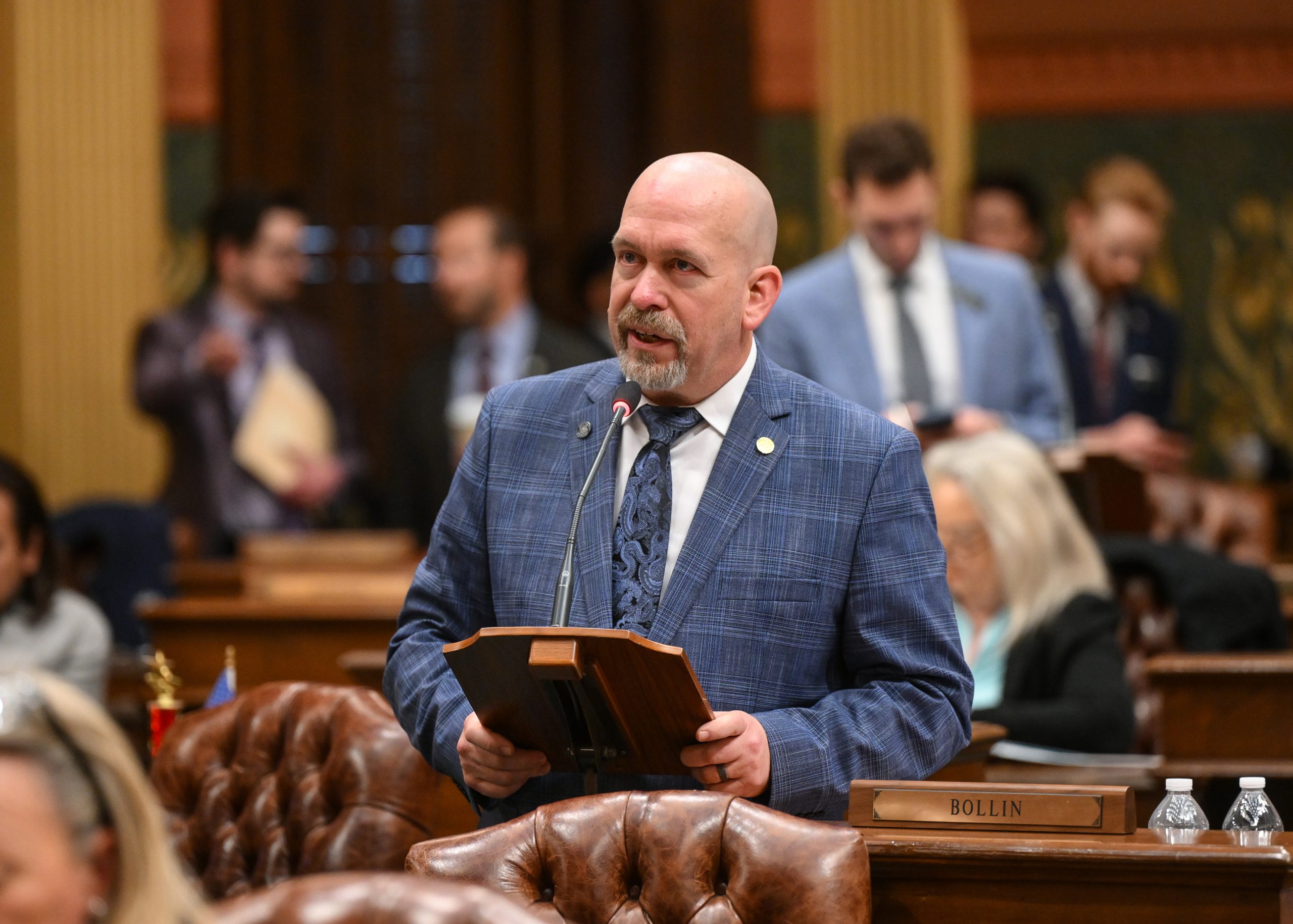
State Rep. Mike Harris today championed the House passage of his plan to ensure the full disclosure of third-party investors injecting shadow cash into Michigan courtrooms.
“Third-party litigation funding sounds like some boring legal jargon out of a law textbook many of us would never read,” said Harris, R-Waterford. “The truth behind the phrase, and what it means for Michigan citizens, is a lot more threatening.”
Third-party litigation funding – where outside investors finance legal action – occurs nationwide, and Michigan is no exception. In many cases, investors can pour significant sums into lawsuits without the knowledge of defendants, judges, or even the plaintiffs themselves.
“My legislation addresses the worst part of this industry: the fact that outside investors can pour money into lawsuits without telling a soul,” Harris said. “The bill does not block lawsuits, restrict legitimate claims, and it does not deny anyone their day in court. What it does is far more basic and far more necessary. It ensures that when an outside company finances a lawsuit and profits from it, the agreement must be disclosed to everyone involved.”
House Bill 5281 would require any third-party funder to disclose agreements to finance or profit from a lawsuit. The plan passed with little support from House Democrats, something Harris said underscored just how influential shadow cash can be.
“We should all be asking why politicians want to keep these concerning courtroom deals secret,” Harris said. “Who does it benefit to allow outside investors to influence decisions in Michigan courtrooms? Someone is profiting from the shadow cash industry, otherwise these shady outside investors wouldn’t be meddling in Michigan courtrooms. It’s concerning to see so many of my fellow lawmakers essentially sign off on these secret deals.”
Michigan does not currently have any guardrails on the use of shadow cash in its judicial system. Harris noted that, without oversight, even foreign actors could exploit these arrangements to influence the legal system, undermine the economy, or gain access to sensitive information.
Harris’ plan ensures the state treats shadow spending like what it is: a high-cost financial product marketed to people in distress. The legislation caps shadow cash spending, requires clear contracts, mandates meaningful disclosures, and includes a 10-business-day cancellation window. The proposal also bans kickbacks, referral fees, and the kind of backroom profits that corrupt trust and integrity.
###




© 2009 - 2026 Michigan House Republicans. All Rights Reserved.
This site is protected by reCAPTCHA and the Google Privacy Policy and Terms of Service apply.